
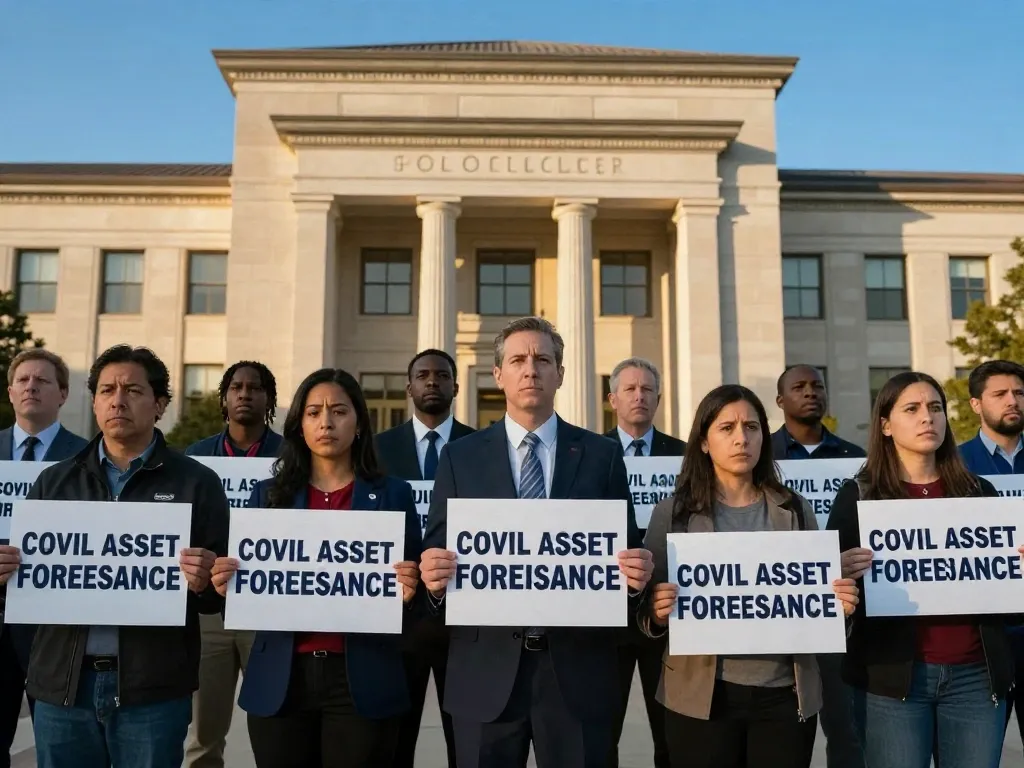
Overview of Civil Asset Forfeiture Laws

Definition and Purpose of Civil Asset Forfeiture
Civil asset forfeiture is a legal process in which law enforcement agencies can seize assets from individuals suspected of involvement in criminal activity, even without a criminal conviction. The primary purpose of civil asset forfeiture is to disrupt and deter criminal enterprises by removing the financial incentives associated with illegal activities. This tool is often used against drug trafficking, organized crime, and other illicit operations, allowing authorities to target the proceeds of crime rather than the individuals themselves.
Historical Context and Evolution of Laws
The origins of civil asset forfeiture can be traced back to maritime law in the 17th century, which allowed for the confiscation of ships engaged in illegal trade. In the United States, the modern practice gained traction in the 1980s with the War on Drugs, as Congress passed the Comprehensive Crime Control Act of 1984, which expanded the scope and ease of forfeiture. Over the years, various state and federal laws have evolved, each with its unique stipulations, contributing to a patchwork of civil forfeiture legislation across the country.
Key Terminology and Concepts
- Forfeiture: The legal process by which the government takes possession of assets connected to criminal activity.
- Seizure: The act of taking possession of property by law enforcement agents.
- Burden of Proof: The obligation to prove one's assertions in a legal context; in civil asset forfeiture, this often falls on the property owner.
- In rem jurisdiction: A legal proceeding directed against property rather than against a person.
State-Specific Variations in Forfeiture Laws
Comparative Analysis of State Statutes
Across the United States, civil asset forfeiture laws vary significantly. For instance, states like Texas and Florida have relatively permissive laws that allow law enforcement agencies to seize assets with minimal oversight, while states like Oregon and New Mexico have enacted reforms to limit or entirely abolish civil asset forfeiture.
In Texas, law enforcement agencies can seize property if they have probable cause to believe that the property is connected to criminal activity, and the burden of proof often falls on the owner to demonstrate their innocence. Conversely, New Mexico requires a criminal conviction before assets can be forfeited, creating a higher standard for law enforcement.
Notable Case Studies and Precedents
One significant case illustrating the variability in state laws is Timbs v. Indiana, where the U.S. Supreme Court ruled that the Eighth Amendment's Excessive Fines Clause applies to states, impacting how forfeiture laws are applied. This ruling has led to increased scrutiny of state forfeiture practices, especially in states with aggressive asset seizure policies.
Additionally, in 2019, New Mexico repealed its civil asset forfeiture laws, requiring a criminal conviction for forfeiture. This legislative change serves as a pivotal case study, highlighting a growing trend toward reform in states with lax forfeiture statutes.
Impact of State Legislation on Law Enforcement Practices
The differences in civil asset forfeiture laws across states have led to varying law enforcement practices and priorities. In states with more lenient laws, police departments may rely heavily on forfeiture as a source of funding, leading to potential conflicts of interest. For example, in Florida, it was reported that law enforcement agencies collected over $100 million from forfeitures in a single year, creating a reliance on these funds to support departmental budgets.
On the other hand, states that have enacted significant reforms, like Michigan, have seen a reduction in the number of forfeiture cases, prompting law enforcement to seek alternative funding sources and methods for addressing crime.
Thresholds for Forfeiture: Evidence and Burden of Proof
Differences in Standards Required for Forfeiture
One of the most significant variations in civil asset forfeiture laws across states is the standard of proof required for forfeiture. In many states, a law enforcement agency only needs to establish probable cause, which is a relatively low standard. This contrasts sharply with states that require a conviction or a higher standard of proof, such as "clear and convincing evidence."
For instance, in California, the burden of proof lies with the state to prove that the property is connected to criminal activity, whereas in Georgia, once the property is seized, the burden shifts to the owner to prove that the property was not connected to crime.
Variability in Owner's Rights and Protections
The rights of property owners facing forfeiture also differ significantly between states. Some states provide robust protections for property owners, including the right to a hearing and the right to legal representation, while others impose substantial hurdles.
In New Jersey, for example, property owners have the right to contest forfeiture in court, allowing for a more equitable process. However, in states like South Carolina, the process can be more opaque, with limited avenues for property owners to reclaim seized assets.
State-Specific Case Outcomes Based on Burden of Proof
Case outcomes can vary dramatically based on the burden of proof required by state law. In a case from Florida, a man had his car seized under civil asset forfeiture after it was used in a drug deal, despite his claims of ignorance. The state only needed to demonstrate probable cause for the seizure. In contrast, in a case in New Mexico, a similar situation resulted in the return of the vehicle to the owner, as the state could not secure a conviction for the underlying crime.
Distribution of Forfeiture Proceeds: State Policies
How States Allocate Forfeiture Funds
The policies surrounding the distribution of forfeiture proceeds vary widely from state to state. Some states allow law enforcement agencies to retain a significant portion of the forfeiture proceeds, creating a financial incentive for aggressive asset seizure practices. In contrast, other states mandate that proceeds be directed to specific public funds or programs.
For instance, in Texas, law enforcement agencies can keep up to 100% of the proceeds from seized assets, leading to a culture where departments are incentivized to pursue forfeitures actively. Conversely, in Virginia, a portion of forfeiture proceeds must be allocated to education and drug treatment programs.
Transparency and Accountability in Fund Management
Transparency and accountability regarding the management of forfeiture funds are critical issues. States with stringent reporting requirements and oversight mechanisms tend to have better accountability regarding how funds are used. For example, New York requires annual reporting on forfeiture activities, including the number of seizures and how proceeds are spent.
In contrast, states with fewer reporting requirements, such as Mississippi, have faced criticism for lack of transparency, making it difficult for the public to hold law enforcement accountable for their forfeiture practices.
Impact of Proceeds on Law Enforcement Budgets
The reliance on forfeiture proceeds can significantly impact law enforcement budgets and priorities. In states where agencies can retain forfeited funds, there is often a direct correlation between the amount of money seized and departmental spending. This can lead to situations where departments prioritize asset seizures over community policing efforts or other crime prevention strategies.
For instance, in a 2019 report, it was noted that the Los Angeles County Sheriff’s Department generated over $20 million in forfeiture revenue, prompting concerns about the potential for abuse and a focus on profit-driven policing rather than community safety.
Reform Efforts and Future Trends in Forfeiture Laws
Grassroots Movements and Advocacy for Change
In recent years, grassroots movements advocating for civil asset forfeiture reform have gained momentum across the country. Activists argue that current laws disproportionately affect low-income individuals and communities of color. Organizations such as the Institute for Justice have been at the forefront of these efforts, highlighting stories of individuals who have lost their property without due process.
These movements have sparked public interest and awareness, leading to increased pressure on state legislatures to reconsider their forfeiture laws. Community forums, social media campaigns, and public testimony have all played a role in shaping the narrative around civil asset forfeiture.
Legislative Reforms Across Different States
Several states have enacted reforms in response to public pressure and advocacy efforts. For example, in 2021, Virginia passed legislation requiring a criminal conviction before property could be forfeited, aligning its laws more closely with those of New Mexico. Similarly, in North Carolina, lawmakers introduced bills aimed at increasing transparency and accountability in forfeiture practices.
These reforms often reflect a broader trend toward protecting property rights and ensuring that law enforcement practices are fair and just. As more states consider reforms, the landscape of civil asset forfeiture is likely to continue evolving.
Predictions for the Future of Civil Asset Forfeiture
Looking ahead, it is likely that civil asset forfeiture laws will face continued scrutiny and potential reform. As awareness of the issues surrounding asset forfeiture increases, more states may follow the lead of those that have enacted reforms, establishing higher standards for evidence and protecting property owners' rights.
Additionally, the rise of technology and data-driven policing may influence how forfeiture laws are applied, with a greater emphasis on accountability and transparency. Public demand for reform is expected to keep pressure on legislators, potentially leading to a more uniform approach to civil asset forfeiture across the nation.



Comments
No comments yet.
Leave a comment